

Incandescent and Halogen Lamps
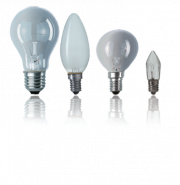
ncandescent lamps are made of glass and metal and do not contain environmentally relevant substances. They can be disposed of by ordinary household waste.
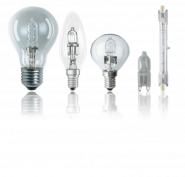
The gas filling of halogen lamps contains the ever smallest amount of halogen or halogen-hydrogen compounds – only about a millionth of a gram. Even if quite a number of lamps should brake, there would be no danger at all for humans or the environment. Therefore, halogen lamps can be thrown into household waste just like incandescent lamps. But they do not belong in the glass recycling container as lamp glass has different properties to bottle glass.
Discharge lamps (Energy saving, fluorescent, metal halide and sodium vapour lamps)
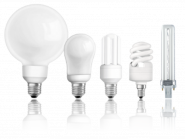
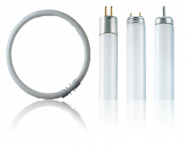
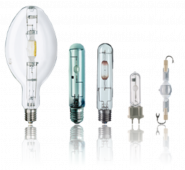
In addition to recyclable phosphors, fluorescent and compact fluorescent lamps contain little amounts of mercury, so do many high pressure discharge lamps. Therefore, they must be submitted to professional recycling as opposed to disposal by ordinary household waste or by bottle bank (bottle glass recycling centres). The crossed-out waste bin is the sign for this.
Thus, they can be handed in at special collection points, usually either with wholesalers or at civic amenity sites. You will find a list of national collection, recycling and service organisations (CRSO) of EU countries here.
Low pressure sodium lamps and sodium xenon lamps can be disposed of without special methods.
Within EU many discharge lamps are regarded by directive 2002/96/EC on Waste of Electric and Electronic Equipment (WEEE - directive of the European parliament and commission regarding the recycling of waste electric and electronic devices). Main target of this EU regulation is avoiding waste from electric and electronic devices in order to reduce amount and value of waste. Furthermore, resources should be preserved by re-use and recycling like, for example, by materialistic and other ways of reutilisation of the electric and electronic waste.
LED, LED retrofit Lamps

LED lamps do not contain any mercury, however, but their waste still must be processed in a special way due to the electronic components and possible traces of poisonous substances within the LED chips themselves. They must not be put in ordinary or household waste. Thus, they show the crossed-out waste bin.
Collection points can be found - like for energy saving and other discharge lamps - inter alia in civic amenity sites or at your wholesaler's. Most industrialised countries have got a nationally responsible organisation for collection and waste management of used lamps like in Germany lightcycle (see 'Recycling organisations' for European ones).
What to do if a lamp’s glass bulb breaks?
If an incandescent or halogen lamp should be concerned, the shards an be disposed of by ordinary household waste (see above).
If the bulb of a discharge lamp should brake, please, take care to air well. Further, please observe the notes what to do in this case.
A damaged LED retrofit lamp should be disposed of professionally due to the electronic components. Some LED chips do also contain tiny little amounts of poison (e.g.arsenic) which is never released, however, so that it is absolutely not dangerous for any user.