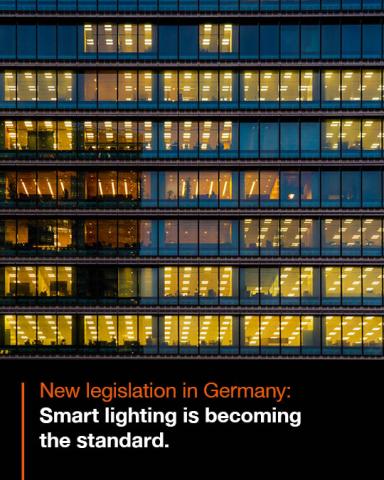
With the new building modernization act 'Gebäudemodernisierungsgesetz' (GModG), which, among other things, transposes the requirements of the European Energy Performance of Buildings Directive (EPBD) into German law, the requirements for building automation and smart control systems in non-residential buildings are increasing. For building operators, this means that connected building concepts, energy monitoring, and automatic lighting controls with occupancy and daylight sensing are increasingly coming into focus. For affected non-residential buildings, such systems will even become a legal requirement in the future.
Smart lighting as part of modern building automation
In the future, automatic lighting controls should operate based on demand, feature occupancy detection, and be appropriately zoned. The goal is to make energy consumption more transparent, identify potential savings, and operate buildings more efficiently.
Radium offers a wide range of suitable lighting solutions for such applications. Controllable products such as the LED T5 and T8 Neo, LED Panel Star DALI, and LED Highbay Star DALI provide the technical foundation for integration into modern lighting control and building automation systems. When combined with occupancy and daylight sensors, lighting is provided only when it is actually needed. This reduces energy consumption, enhances user comfort, and supports the requirements of modern smart building concepts.
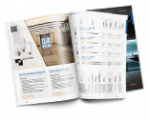
Would you like to integrate LED luminaires with sensors into your building? Then learn more about the Radium LED Surface, Damp Proof, Highbay*, and Floodlight* in our online catalog.
Here’s what building operators need to know now
- Building automation and automatic lighting controls are becoming a legal requirement in many non-residential buildings.
- Non-residential buildings with a rated capacity of the heating, air conditioning, or ventilation system exceeding 70 kW must be equipped with an automatic lighting control system by December 31, 2029, provided that the installation is technically feasible and economically reasonable.
- The automatic lighting control system must be appropriately zoned and include occupancy detection.
- Motion and daylight sensors help ensure energy is used according to demand and unlock potential savings.
- Energy monitoring and consumption analyses provide transparency and support the optimization of building operations.
- Operators of existing buildings should take advantage of planned renovations early on to implement building automation and lighting control requirements in a cost-effective manner.
- With the zero-emissions standard for new buildings scheduled to take effect in 2030, it is worthwhile to align building and lighting technology with future requirements early on.
Greater efficiency, greater transparency, greater future-proofing: With the right Radium products, you can start using smart and energy-efficient lighting solutions today.
*The luminaire has a sensor interface. Sensors will be available soon.
Text of the legislation:
Gesetz zur Einsparung von Energie und zur Modernisierung der Wärmeversorgung in Gebäuden (Gebäudemodernisierungsgesetz - GModG): https://www.gesetze-im-internet.de/geg/GModG.pdf